

Many buyers think about flying to China when they start sourcing products.
I understand why.
If you find suppliers on 1688, Alibaba, or Made-in-China, it is normal to worry. Is this a real factory? Are the photos real? Will the quality match the sample? Will the supplier disappear after payment?
So some buyers decide to visit Yiwu, Guangzhou, Shenzhen, or other sourcing cities by themselves.
That sounds safe, but the cost is higher than many people expect.
For a 7–10 day trip, most overseas buyers need to prepare for several costs.
Flights can be a few hundred dollars if you are coming from Southeast Asia, but from Europe or North America, the ticket can easily be much higher.
You also need a visa, hotel, meals, local transport, and sometimes a translator.
A simple business hotel in Yiwu or Guangzhou may not be expensive, but the total cost adds up quickly. If you need an English-speaking guide or factory interpreter, that is usually charged by the day.
For many buyers, a short sourcing trip can cost around $2,500–$3,500, sometimes more depending on airfare and travel season.
And this does not include the time you lose from your own business.
Visiting China does not automatically mean you will find a good factory.
If you only visit the suppliers you found online, you may just be seeing what they want you to see.
Some suppliers have nice showrooms but weak production ability.
Some are trading companies, not factories.
Some factories look small but are actually good.
Some look impressive but do not care about small orders.
Without local experience, it is hard to judge quickly.
There is also the language problem. In big cities and trade shows, you may meet English-speaking salespeople. But in many real factories, especially small and mid-sized ones, Chinese is still the main working language.
If you cannot communicate clearly, mistakes happen easily.
Another small problem many buyers forget: your normal online tools may not work the same way in China.
Some global websites and apps may be difficult to access on local networks. If one supplier is not suitable and you need to search for backup factories, you may waste a lot of time.
That is why you should prepare backup supplier options before the trip.
But if you already need to prepare everything before coming, you should also ask one question:
Is it really worth flying here for this order?
If your order value is very large, visiting China can be useful.
But if your purchase value is under $50,000, hiring a local China sourcing agent is often more practical.
A sourcing agent can help you do the work without the travel cost.
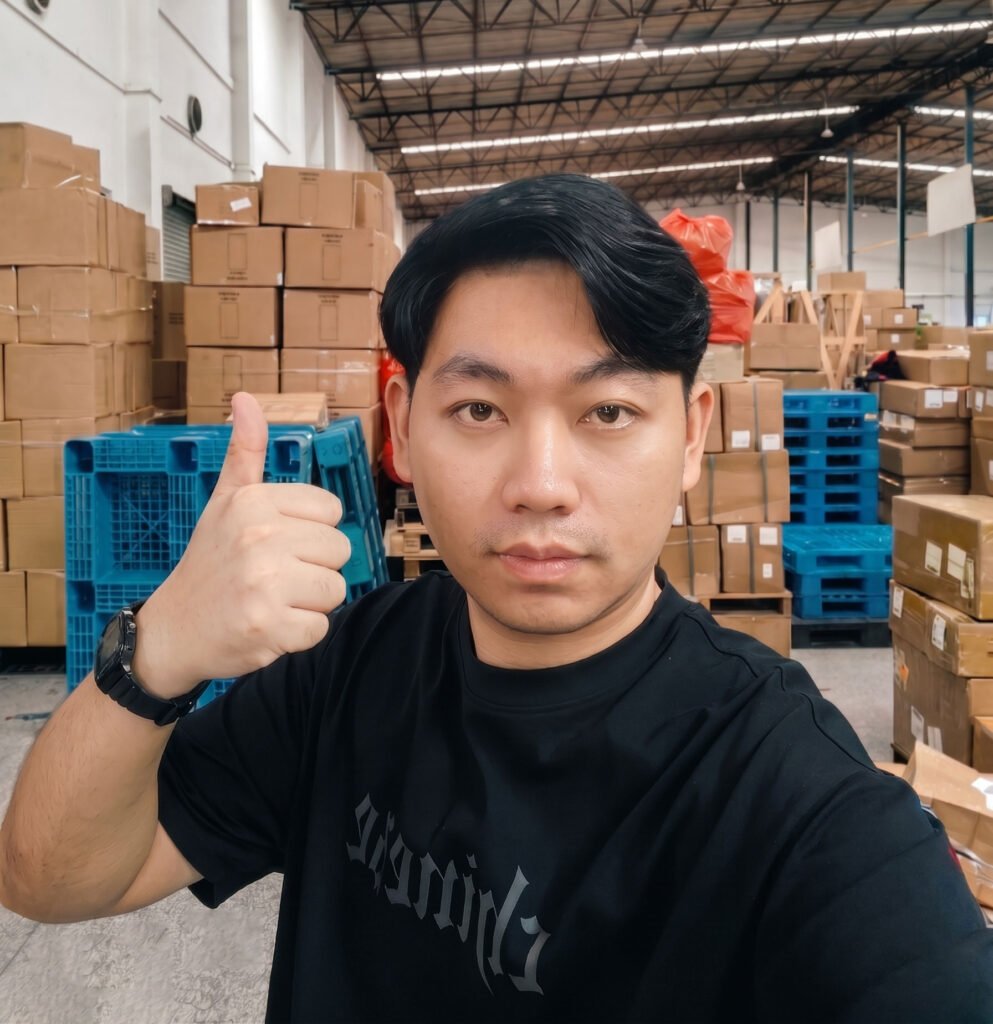
At MyChinaMate, I help overseas buyers with:
Instead of spending thousands of dollars on flights, hotels, and translators, you can use a local person to check the supplier first.
Many buyers do not buy from only one factory.
You may buy packaging from one supplier, tools from another, and accessories from a third one.
If each supplier ships separately, international shipping becomes expensive and messy.
A sourcing agent can help collect goods from different suppliers, check them, repack them if needed, and ship them together.
This saves money and reduces mistakes.
Flying to China is useful if you are building a long-term supply chain or placing a large order.
But for many small and medium buyers, it is not the first step.
The smarter way is to let someone local check the supplier, inspect the goods, and confirm the real situation before you spend money on a trip.
At MyChinaMate, I help buyers source products from China with less guesswork.
You can send me a product photo, supplier link, or buying plan. I can help you check whether the supplier is worth your time before you book a flight.