
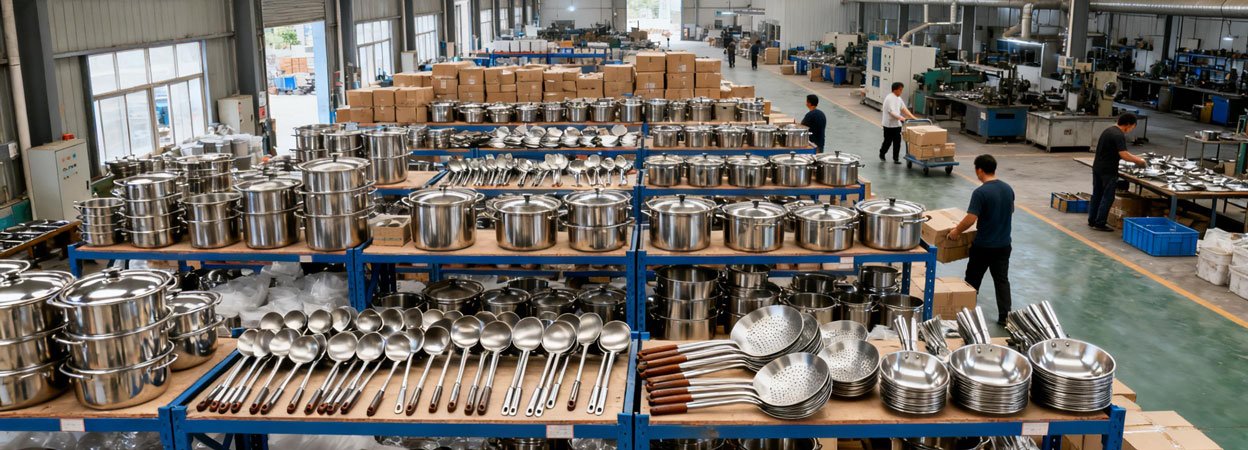
Importing wholesale kitchen supplies from China is a high-profit business, but it is also full of hidden traps.
The most common pitfall is Material Fraud. For the same product, genuine 304 stainless steel costs twice as much as ordinary steel. If you rely solely on the internet or platforms like Alibaba to judge a factory, you are an easy target for scams. Unethical factories often gamble on the fact that you will not fly to China to inspect the goods personally.
The Case of Hans: A $50,000 Lesson
My long-term client, Hans, owns a kitchen equipment company in Germany. He used to be an avid Alibaba buyer.
A few years ago, he met a new supplier online. They seemed perfect: complete certificates, professional video conferences, and a massive factory facility. Hans was convinced they were a top-tier manufacturer.
The Reality: They were indeed a professional factory, but facing fierce market competition, they chose to cut corners to offer lower prices. They secretly downgraded the materials to secure the order.
Hans was the victim of this “Bait and Switch.” The sample they sent him was a perfect 304 food-grade stainless steel mixing bowl. Without hesitation, Hans ordered a shipment worth $50,000.
When the goods arrived, they looked identical to the sample due to high-quality electroplating. Hans listed them for sale immediately. Less than two weeks later, he received a notification from the platform regarding “Material Fraud.” A savvy consumer had tested the bowl, found it to be fake, and sued Hans’ company, resulting in a fine of tens of thousands of dollars.
The Truth Revealed:
Hans rushed the product to a laboratory. The results showed the bowls were not the promised 304 stainless steel, but cheap 201 industrial stainless steel with high manganese content (which exceeds safety standards).
The Legal Dead End:
Hans took his English international contract and tried to claim compensation. The local Chinese court rejected the case, stating that “International contracts are not under local jurisdiction” and advised him to find a court in Beijing. Unfamiliar with Chinese law and exhausted by the bureaucracy, Hans eventually gave up the lawsuit.
The Lesson: In the kitchenware industry, what you see is not always what you get. The deepest traps are hidden inside the material itself.

Unveiling the Scams: Stainless Steel & Silicone
1. The Stainless Steel Counterfeit
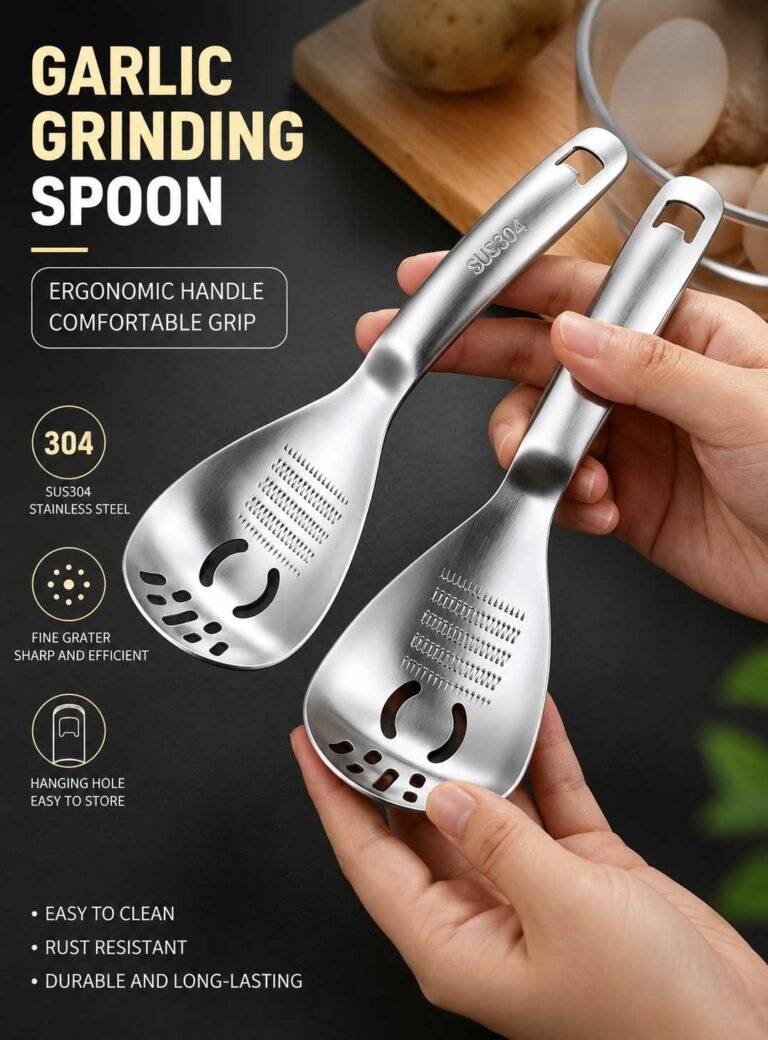
- 304 Stainless Steel: The mandatory food-grade standard for Europe and the USA. It is corrosion-resistant, non-toxic, and contains 18% Chromium and 8% Nickel.
- 201/202 Stainless Steel: It is nearly 40% cheaper than 304 but rusts easily when exposed to acids or alkalis (like vinegar or lemon juice).
- The Trap: Unethical factories use polished 201 to mimic 304. They look identical to the naked eye and can only be distinguished by professional instruments.
2. The Fake Food-Grade Silicone
- Standards: The US FDA standard for silicone is lower, while the European LFGB standard is stricter and requires testing for Volatile Organic Compounds (VOCs).
- The Trap: Bad factories recycle second-hand silicone, adding large amounts of whitening agents and cheap industrial silicone. When heated, this silicone releases toxic substances and produces a pungent, plastic smell.
Why International Contracts Fail in China
Many buyers believe that signing a full English contract gives them legal protection.
The Reality: When problems arise, an English contract often fails to provide real legal aid. You will waste money on expensive lawyers and months on waiting. As a foreigner suing in China, factories know you cannot afford the long, complicated process, so they ship substandard goods without fear.
Leo’s Ultimate Weapon: The Chinese Domestic Contract
As your sourcing agent, my greatest value is not just finding goods, but controlling them.
I never let my clients rely solely on English contracts. I will represent you and sign a strict contract written in Chinese, subject to Chinese law, using my local entity.
The Power of This Contract:
- Clear Compensation Clauses: “If the bulk material fails testing (e.g., 304 turns out to be 201), the factory must pay a penalty equal to 2 times the value of the goods.”
- Local Jurisdiction Advantage: The contract stipulates that any dispute will be handled by the court in Yiwu (or the factory’s location) directly. This means if the factory tries to cheat, I can quickly apply to the court to freeze their bank accounts.
- Psychological Deterrence: When a factory sees you present a professional Chinese legal contract, they know: “This foreigner has a local expert behind him. We cannot trick him.”
How Leo Ensures You Buy 100% Compliant Kitchenware
I don’t wait until the goods arrive at your warehouse to find problems. I extinguish the risk right here in China.
1. On-Site “Potion Test” (Chemical Reagent)
For stainless steel products, I carry professional Stainless Steel Identification Fluid.
- The Process: I put a drop on the steel.
- The Result: If it turns Red, it is cheap 201. If it does not change color, it is real 304.
- The Benefit: This is faster than a lab test. I can reject fake goods immediately during the inspection.
2. Silicone “Pinch Test” (Physical Stress)
For silicone spatulas or molds, I forcefully twist and stretch the product.
- The Result: If the stretched area turns White, it means the silicone is mixed with cheap plastic fillers. If the color remains consistent, it is 100% Pure Silicone.
3. Laboratory Verification
For large orders, I cut samples from the mass production line and send them to SGS or TUV for formal FDA/LFGB testing. This ensures the certificate is based on your specific batch, not an old report the factory used to fool you.
🚀 Don’t Let “Materials” Destroy Your Brand
Kitchenware is a high-repurchase, high-profit category, but safety is the prerequisite.
You don’t need to be a materials scientist; you just need a local partner who understands both the industry and the law.
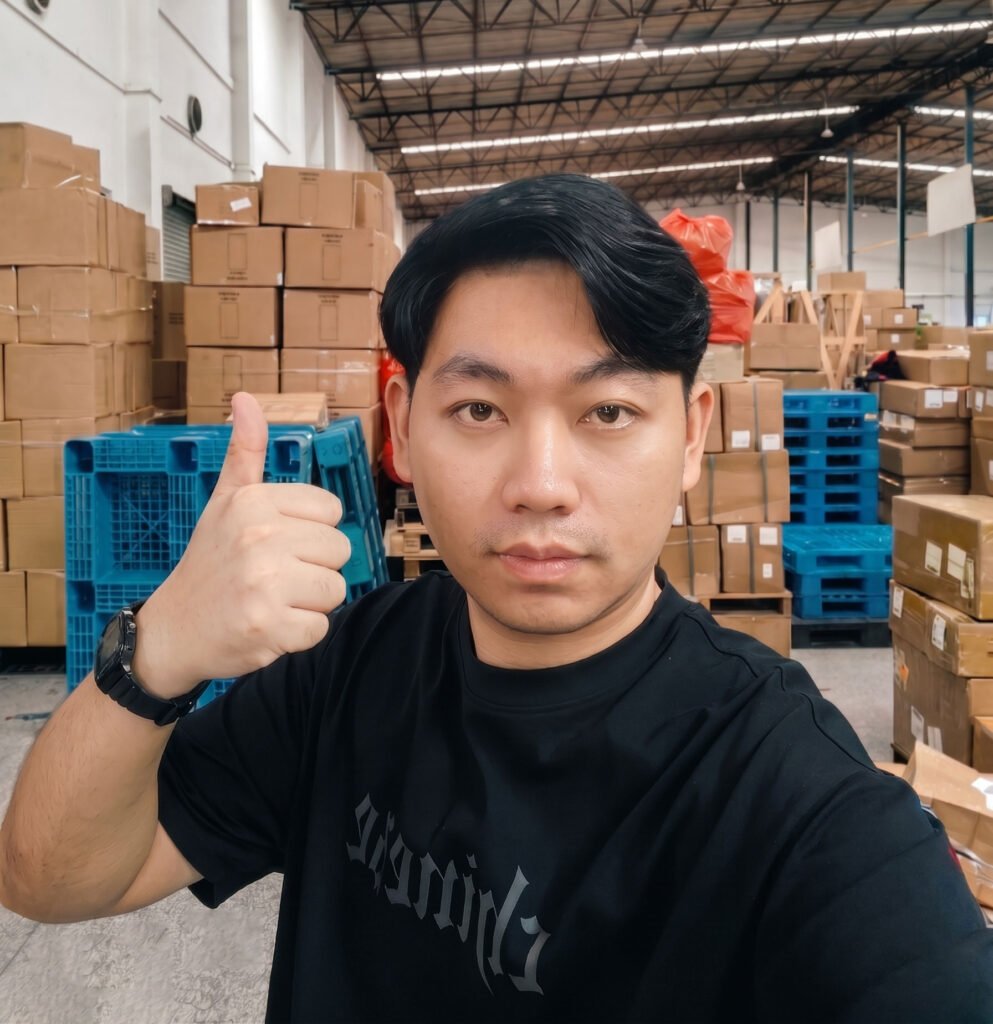
I am Leo. I am here in China to guard the quality and contract of every bowl and spoon you buy.
Contact me to get your FREE “Kitchenware Sourcing Compliance Checklist”:
- WhatsApp: +86 15759861323
- Email: mychinamate@Gmail.com
The “Miniature Model” Scam: A China Sourcing Nightmare (2026)
FOB vs DDP: How to Avoid the “Cheap Shipping” Scam
How to Verify Product Samples Without Flying to China: The Lowest Cost Strategy (2026)
Why Sourcing from China is Unbeatable: The Brutal Truth
Factory vs. Trading Company: How to Spot a Liar in 5 Minutes (The Video Call Ambush)
China Quality Control: Avoid the “Golden Sample” Trap